For the past two decades, driving website reach meant playing by a strict set of rules: target specific keywords, build hundreds of backlinks, and fight for the top blue link on Google. But in 2026, the game has fundamentally changed.
As users increasingly turn to AI models like Gemini, Perplexity, and ChatGPT for answers, traditional search clicks are dropping. The new priority is Generative Engine Optimization (GEO)—also known as Answer Engine Optimization. If you want your website to maintain its reach this year, you need to optimize for AI visibility, not just search engine rankings.
Here is exactly how the landscape is shifting and how you can adapt your content strategy today.
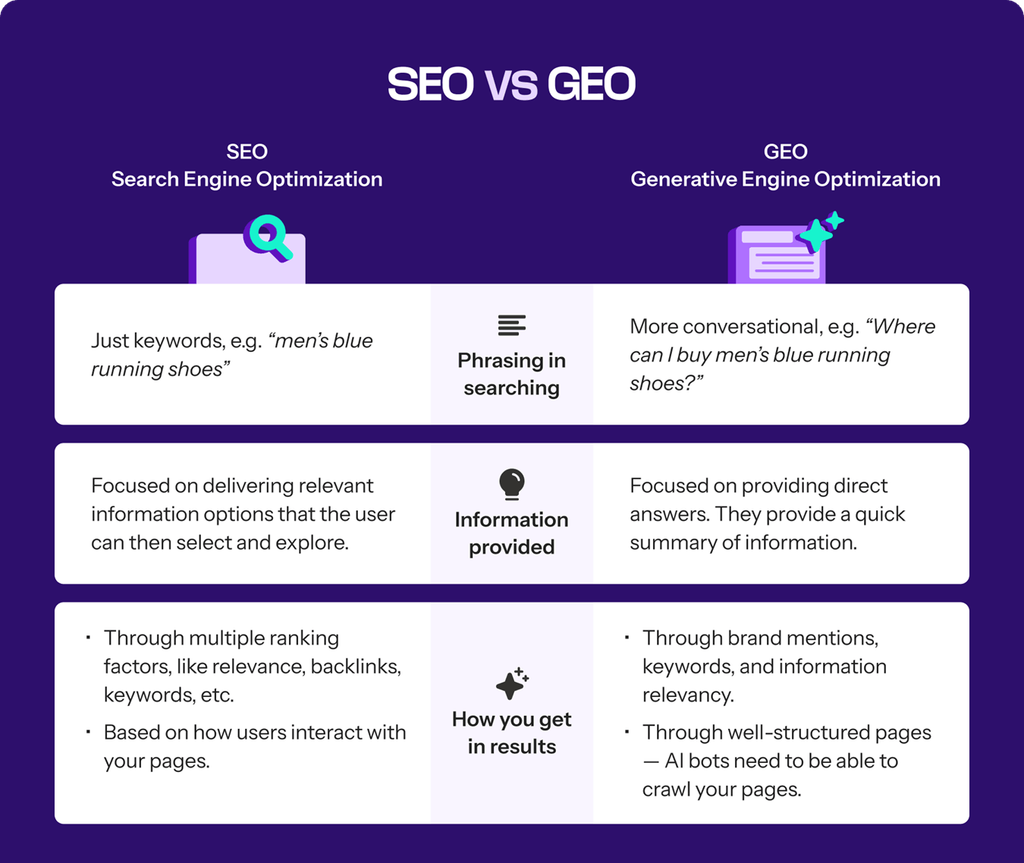
1. Topic Targeting Over Keyword Targeting
One of the biggest GEO trends for 2026 is the death of rigid keyword stuffing. AI generative engines do not process information by matching exact phrases; they understand concepts, context, and entities.
The Old Way: Writing five different blog posts to capture variations like “best running shoes,” “top running shoes 2026,” and “running shoes reviews.”
The GEO Way: Creating one comprehensive, authoritative hub that covers the entire topic of “choosing running shoes,” addressing subtopics, user intent, and skill levels. AI favors content that provides a complete picture over fragmented keywords.
2. The Rise of Structured, Succinct Content
Generative engines are designed to synthesize information and deliver a quick summary. They do not want to read a 500-word personal anecdote before getting to the recipe or the tutorial.
To make your website reach the AI overviews, you must modify your content structure:
- Give immediate answers: Place the direct answer to a query immediately after the heading.
- Use clear architecture: Rely heavily on H2s, H3s, bulleted lists, and tables to make your data easily parsable by AI bots.
- Provide structured summaries: Start long-form posts with a “Key Takeaways” bulleted list that an AI can easily scrape and cite.
3. Brand Mentions are the New Backlinks
Since generative engines do not operate on a traditional numbered ranking system, there are no “positions” to fight for. Instead, the AI looks for consensus across the web to determine authority.
In 2026, getting your brand or website cited in AI responses requires widespread digital presence. This means engaging in digital PR, guest posting on authoritative third-party sites, and sparking authentic conversations in community hubs like Reddit. When multiple trusted sources mention your brand in relation to a specific topic, AI models learn to associate you as an expert in that space.
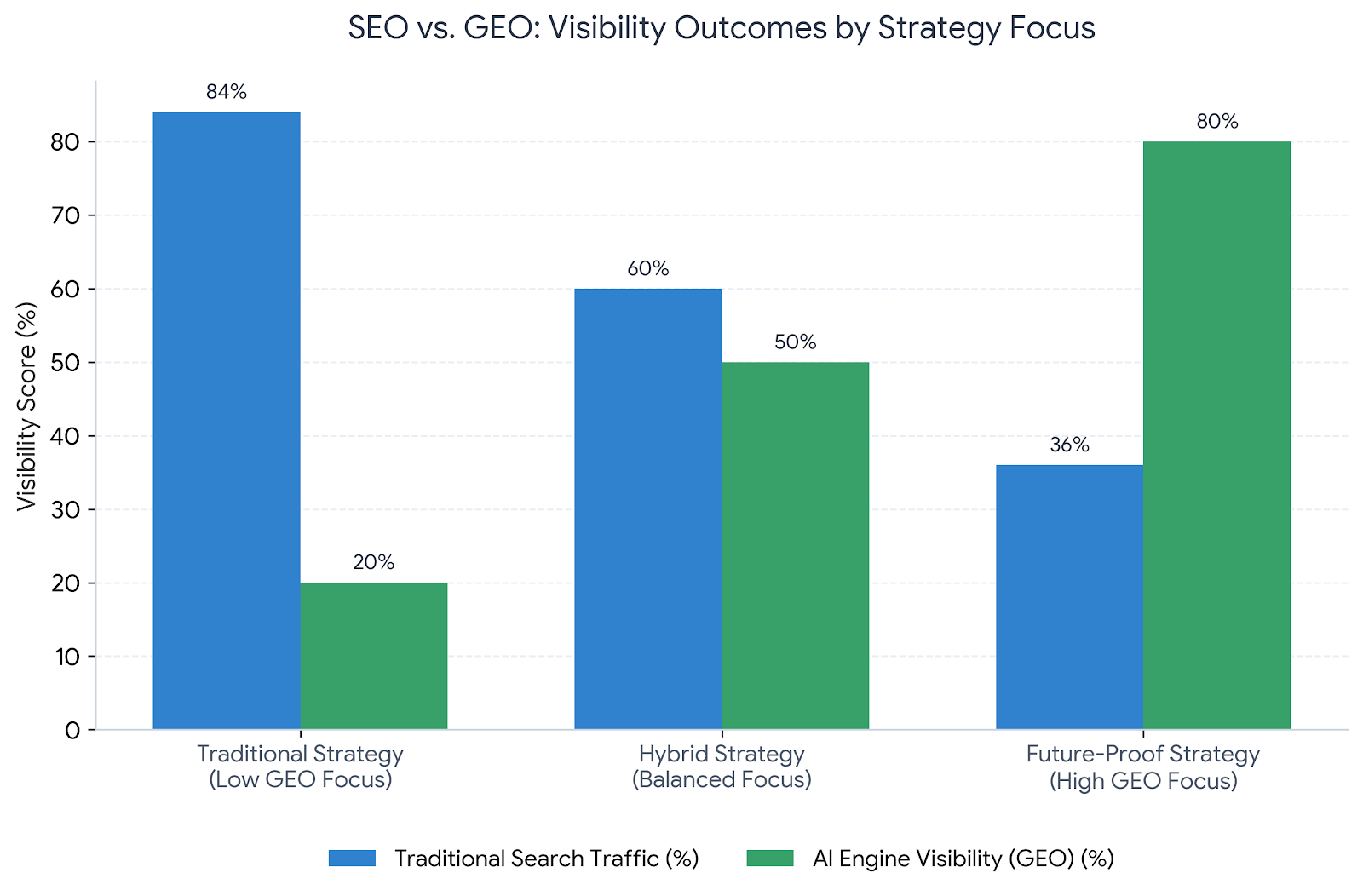
Visualize the Shift: SEO vs. GEO
Adjust the parameters below to see how shifting your resources from traditional keyword density to intent-based authority changes your overall visibility in 2026.
This chart illustrates how a website’s visibility shifts across three different strategic approaches:
- Traditional Strategy: Heavily favors old-school ranking factors (keyword density, raw backlinks), resulting in high traditional search traffic but very poor visibility in AI summaries.
- Hybrid Strategy: A balanced approach that attempts to straddle both lines, resulting in mediocre performance across both traditional and AI-driven search engines.
- Future-Proof Strategy: Prioritizes Generative Engine Optimization (brand authority, structured data, conversational phrasing). While it sacrifices some traditional traffic points, it maximizes visibility where search is heading: AI-generated answers.
4. Prioritizing Trust and Evidence-Backed Claims
AI models favor clear, expert-authored, and recent content. A post packed with assertions will no longer cut it. You must back up your claims with data, cite primary sources, and demonstrate real-world expertise.
The gap is widening between brands that proactively manage how AI understands them and those still chasing blue links. By structuring your content for generative engines today, you build a compounding advantage that secures your website’s reach for the future.
Conclusion
Adapt to GEO and Become the Definitive Answer
The transition to Generative Engine Optimization (GEO) is about much more than keeping up with algorithm updates, it is a fundamental shift toward filtering out the digital noise that clutters traditional search results. The days of hacking your way to the top with keyword density and raw backlinks are over.
AI models are now doing the heavy lifting to deliver clear, accurate information, which means your content must be structured to cut through the chatter. To maintain your website’s reach in 2026, you must adapt your content to feed AI engines exactly what they are looking for: direct answers, clear formatting, and widespread brand trust.
By focusing on topical depth and conversational authority, you stop fighting for page-one rankings and start becoming the definitive answer. The brands that optimize for AI today will own the visibility of tomorrow.
Are you planning to update your existing content for GEO, or are you focusing purely on new posts? Let me know your strategy in the comments below, and explore for more strategies on future-proofing your brand!